
SUSTech researchers deploy a comprehensive online database for exploring ~20,000 public Arabidopsis RNA-Seq libraries
DATE:2020-08-07
Application of Next Generating Sequencing (NGS) technology in transcriptome profiling has greatly improved our understanding of transcriptional regulation at a genome-wide scale in the last decade, and tens of thousands of RNA-sequencing (RNA-seq) libraries have been produced by the research community. However, accessing such a huge amount of RNA-seq data poses a big challenge for groups that lack dedicated bioinformatic personnel or expensive computational resources.
On Aug 4, Associate Professor Jixian Zhai (Institute of Plant and Food Science, Department of Biology) led his research team to publish a paper in Molecular Plant. The paper was titled “A comprehensive online database for exploring ~20,000 public Arabidopsis RNA-Seq libraries”. The Arabidopsis RNA-seq database (ARS, http://ipf.sustech.edu.cn/pub/athrna/) is a “Google-style” website that integrates 20,068 publicly available Arabidopsis RNA-seq library data deposited at GEO, SRA, ENA, and DDBJ. ARS calculated the gene expression level at each library and performed co-expression analysis. ARS also classified all libraries into 1176, 1102, 12, and 176 groups of mutants, treatment conditions, tissues and development stages, respectively, and analyzed the differentially expressed levels of all genes under different mutants or treatments.
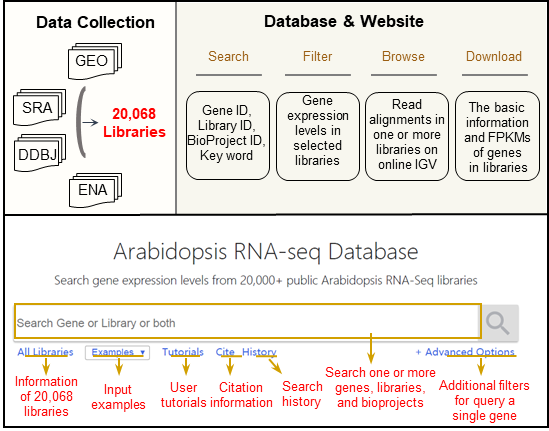
Figure 1: Overview of the construction of Arabidopsis RNA-Seq Database (ARS).
ARS supports queries of gene IDs, library IDs, BioProject IDs, keywords, or a combination of these query types to show expression levels of specific genes in selected libraries in the form of one or more tables and diagrams. Besides, a built-in online Integrative Genomics Viewer (IGV) supports viewing detailed read alignments of each library, and the users can search and select libraries by keywords. The search results can be easily shared with others by clicking the “Share” button to generate a link for the current page.
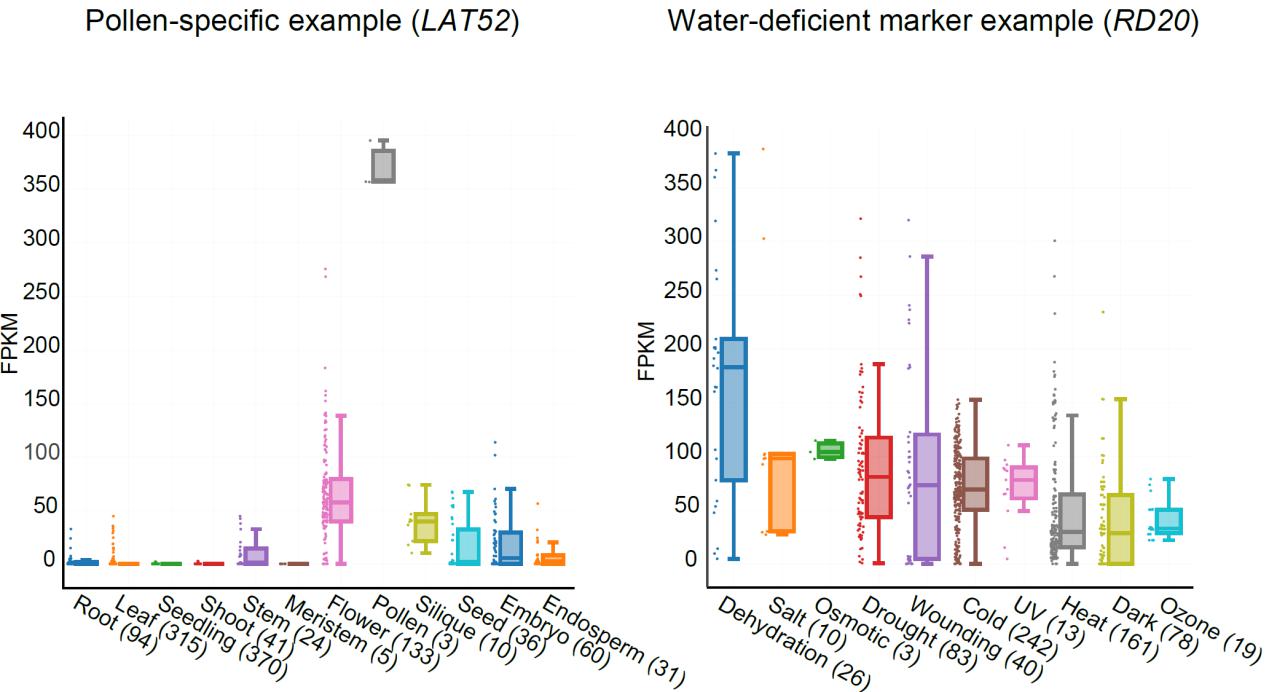
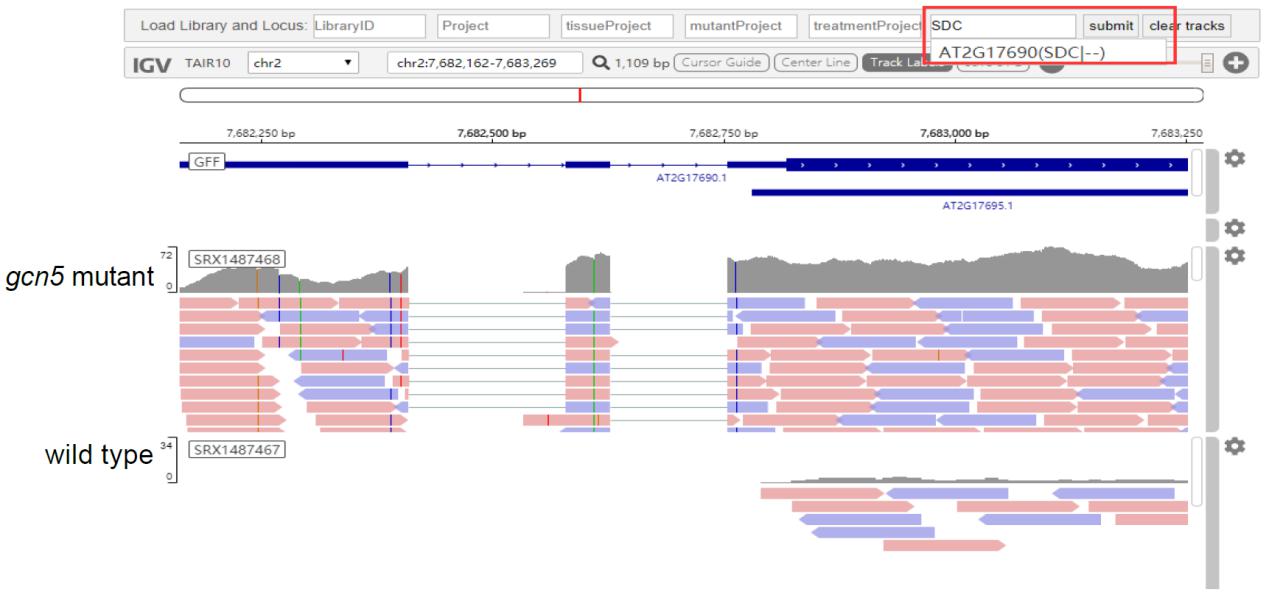
Figure 2: The expression levels among different tissues and stress (top), overview of Online IGV (bottom).
Associate Professor Jixian Zhai is the corresponding author of the paper. The co-first authors are research assistant Hong Zhang, Fei Zhang, and Ph.D. student Yiming Yu. This paper is supported by National Natural Science Foundation of China (31871234), the Program for Guangdong Introducing Innovative and Entrepreneurial Teams (2016ZT06S172), and the Shenzhen Sci-Tech Fund (KYTDPT 20181011104005)
Source: Department of Biology, Institute of Plant and Food Science
latest news
-
SUSTech team identifies transposable elements as key determinants of 3D genome structure
Date:2026-03-16
-
SUSTech Researchers Uncover the Molecular Mechanism of C1ql1/BAI3 Assemblies in CF-PC Synapse Development
Date:2025-12-29
-
Researchers discover mechanisms underlying how gravity competes with vision to guide brain’s inner compass
Date:2025-09-22
-
Dynamic changes in transposable elements shape human three-germ-layer differentiation
Date:2025-09-04